
Mobile simulator training / Across the USA
Mobile unitMobile Heavy Equipment Simulator Training
Bring a heavy equipment simulator training environment to your crew. Operators get room to learn more safely while your production machines stay on the job.
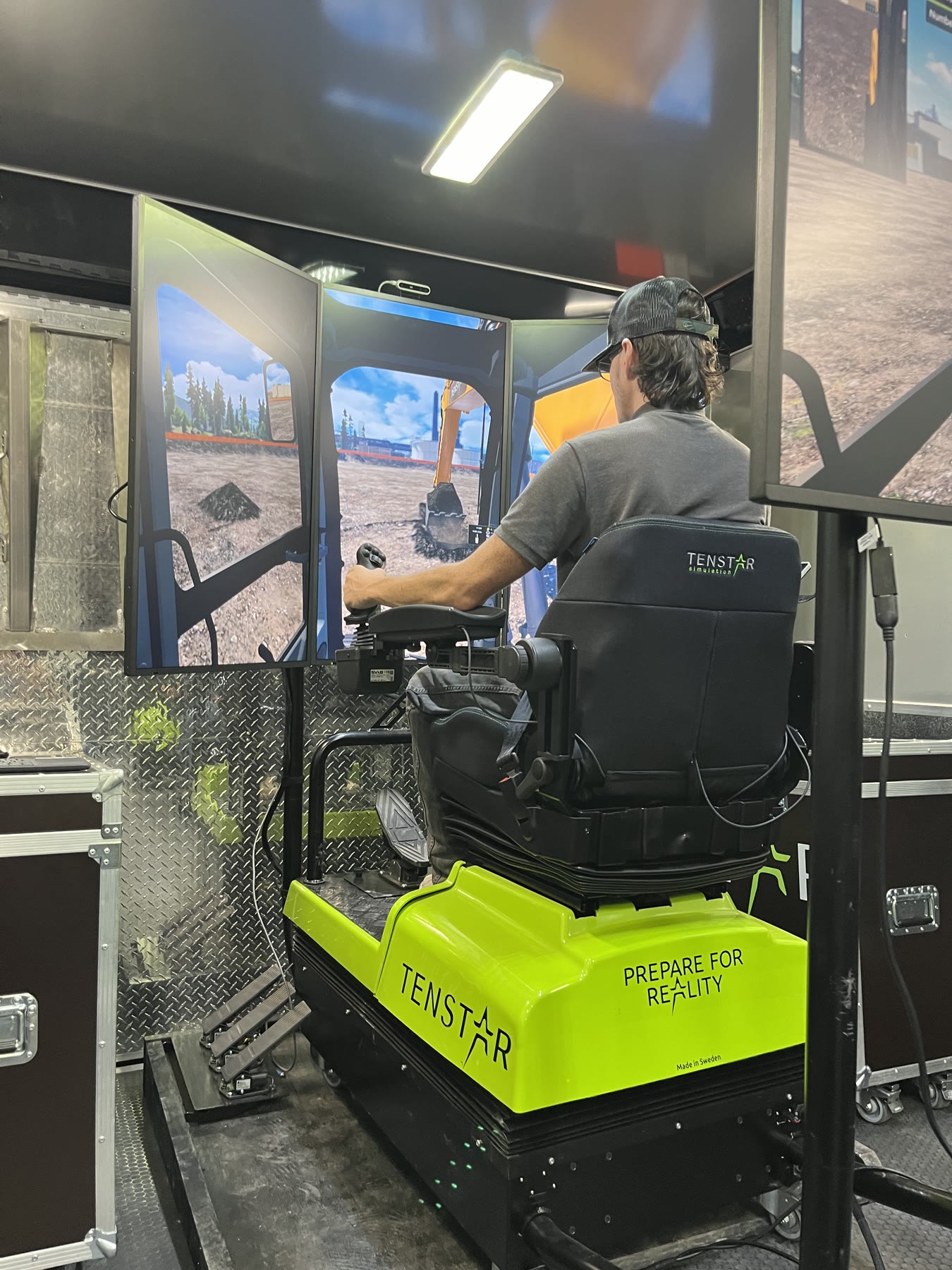
Training comes to you.
Production keeps moving.
Practice supports application.
Why train in the simulator
Make space to learn without taking a machine out of the cycle.
Simulator training creates breathing room between instruction and live production, giving the operator a place to practice and the operation a way to protect working time.
- 01
Practice away from production pressure
Give operators room to learn in a safer environment before asking them to apply new knowledge around working equipment.
- 02
Build confidence deliberately
Structured simulator time helps operators become more comfortable with decisions and controls before moving into field application.
- 03
Keep machines on the job
Create a training opportunity without pulling production equipment away from the work it is there to perform.
- 04
Bring training to the crew
The mobile simulator trailer travels to customer locations across the United States.
Real sessions inside the trailer
One mobile bay. Multiple ways to practice.
Operators can work through different machine controls and scenarios while instructors observe, guide, and connect simulator decisions to field application.
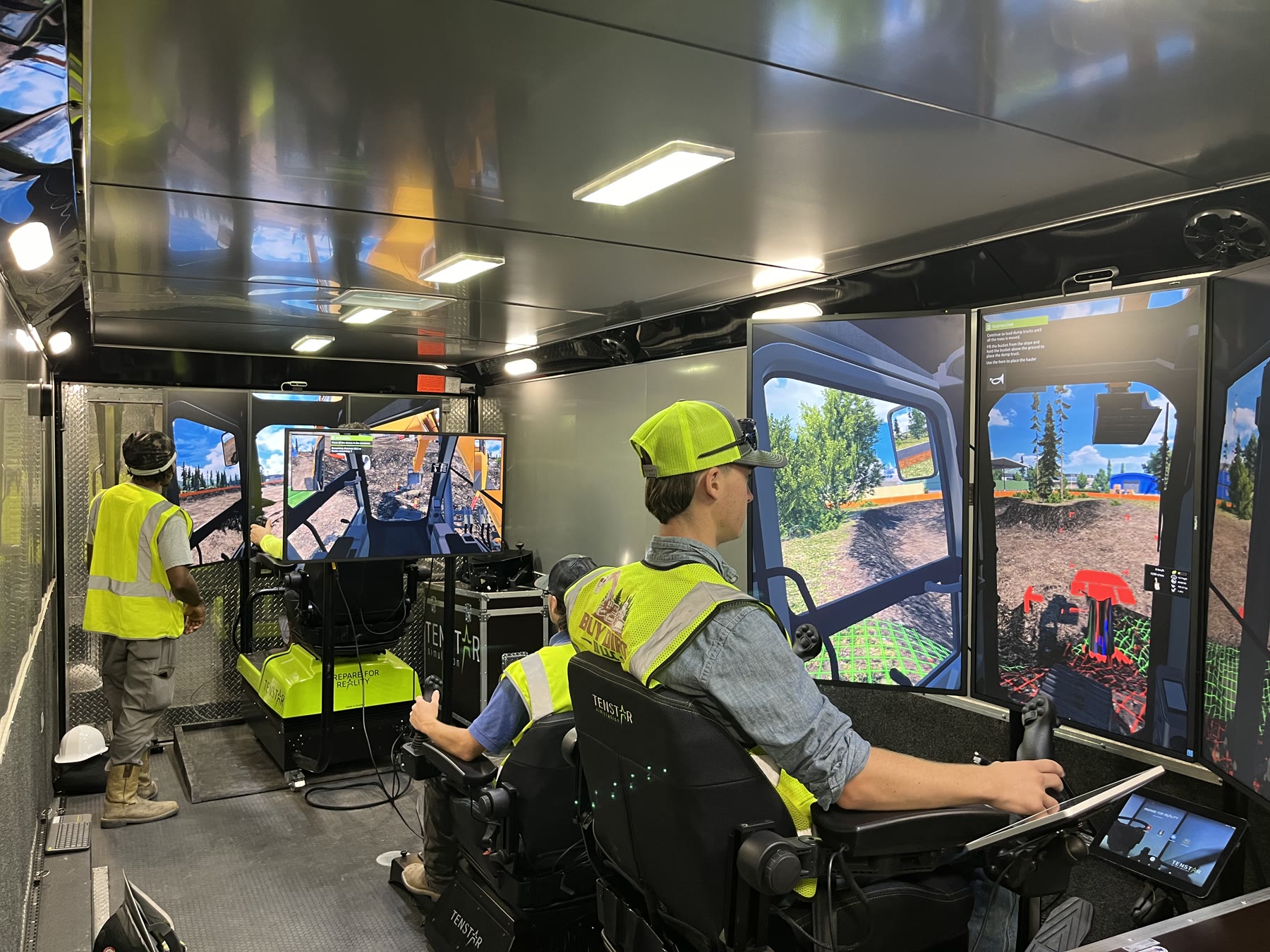
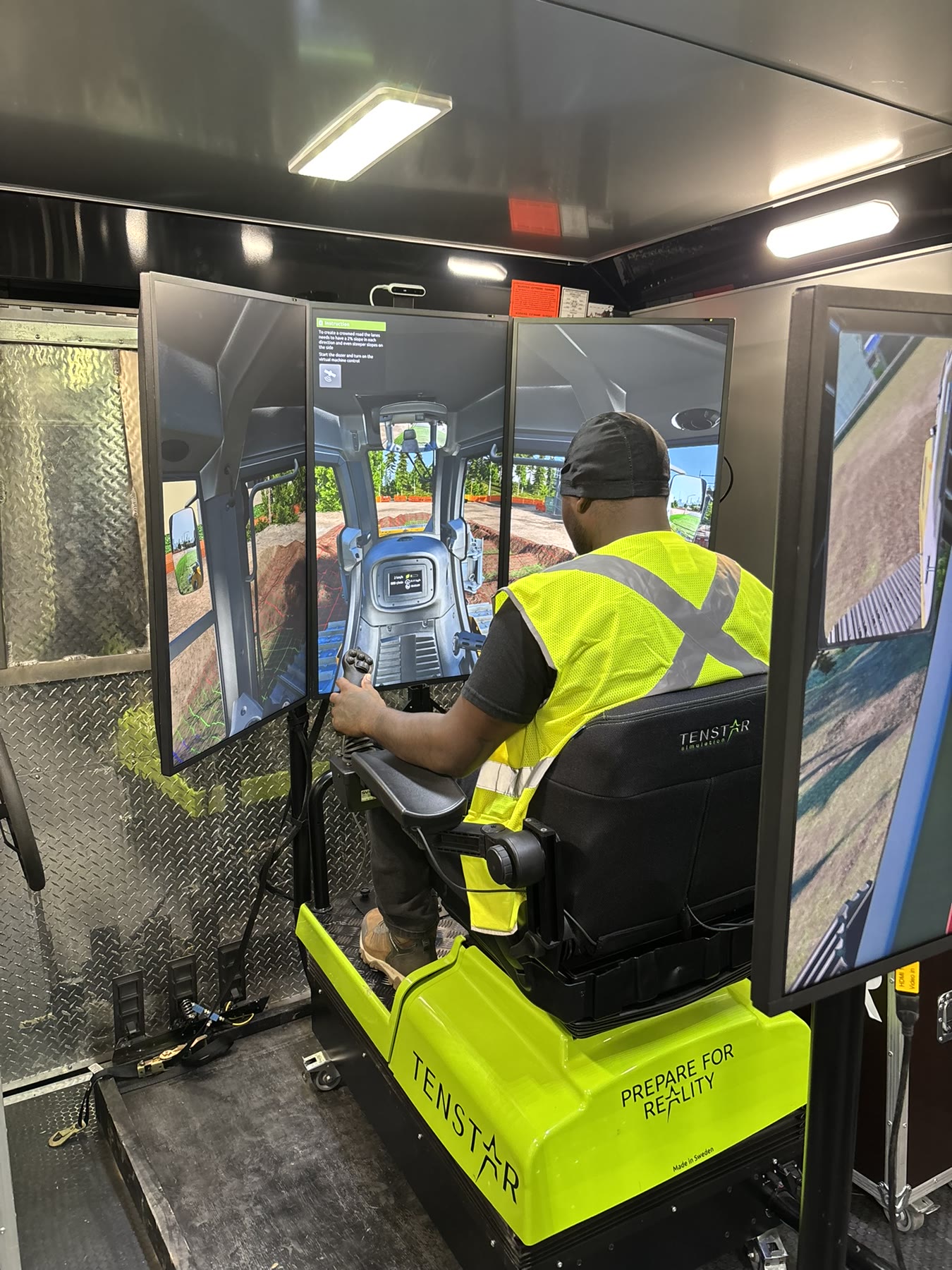
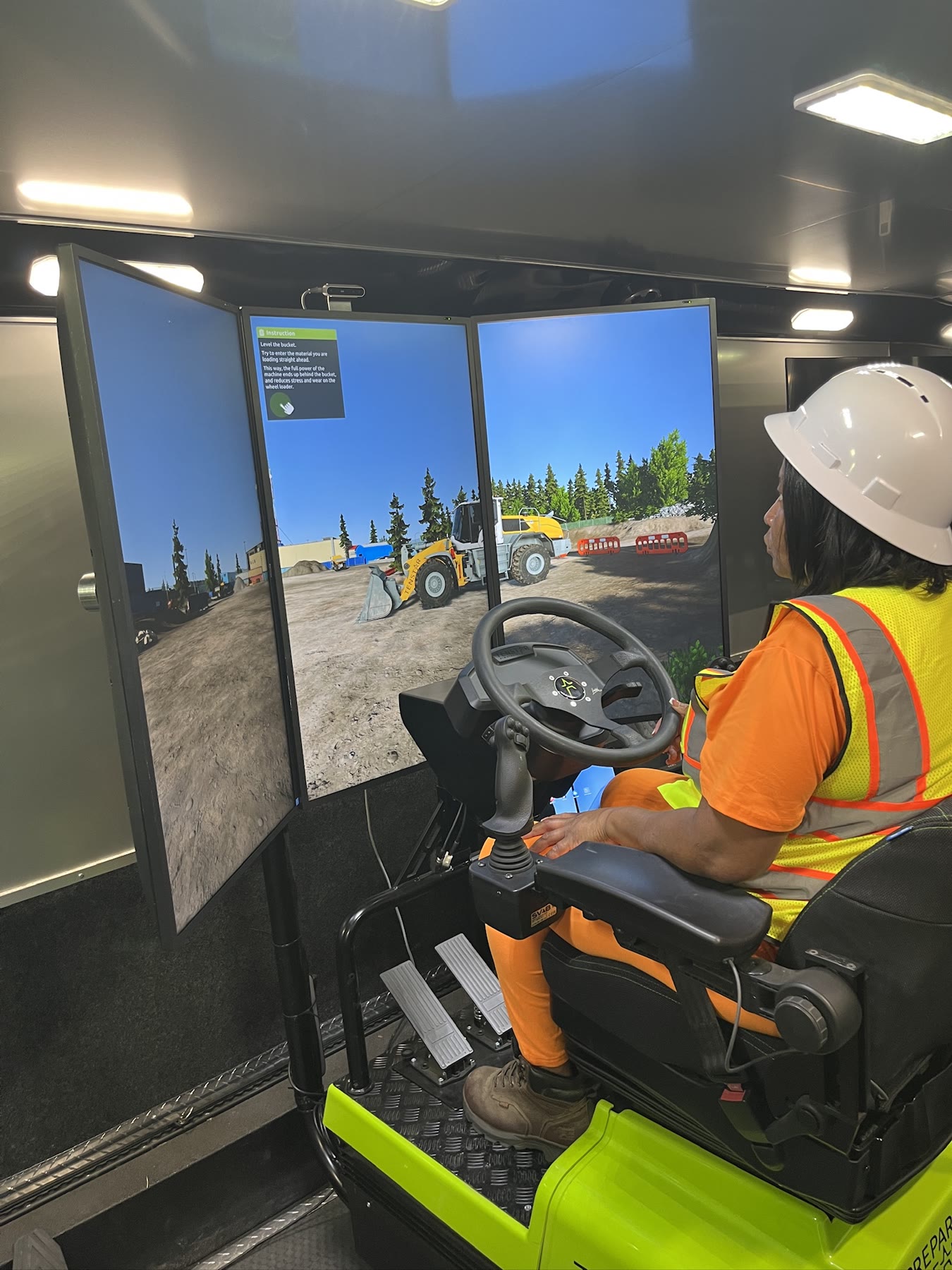
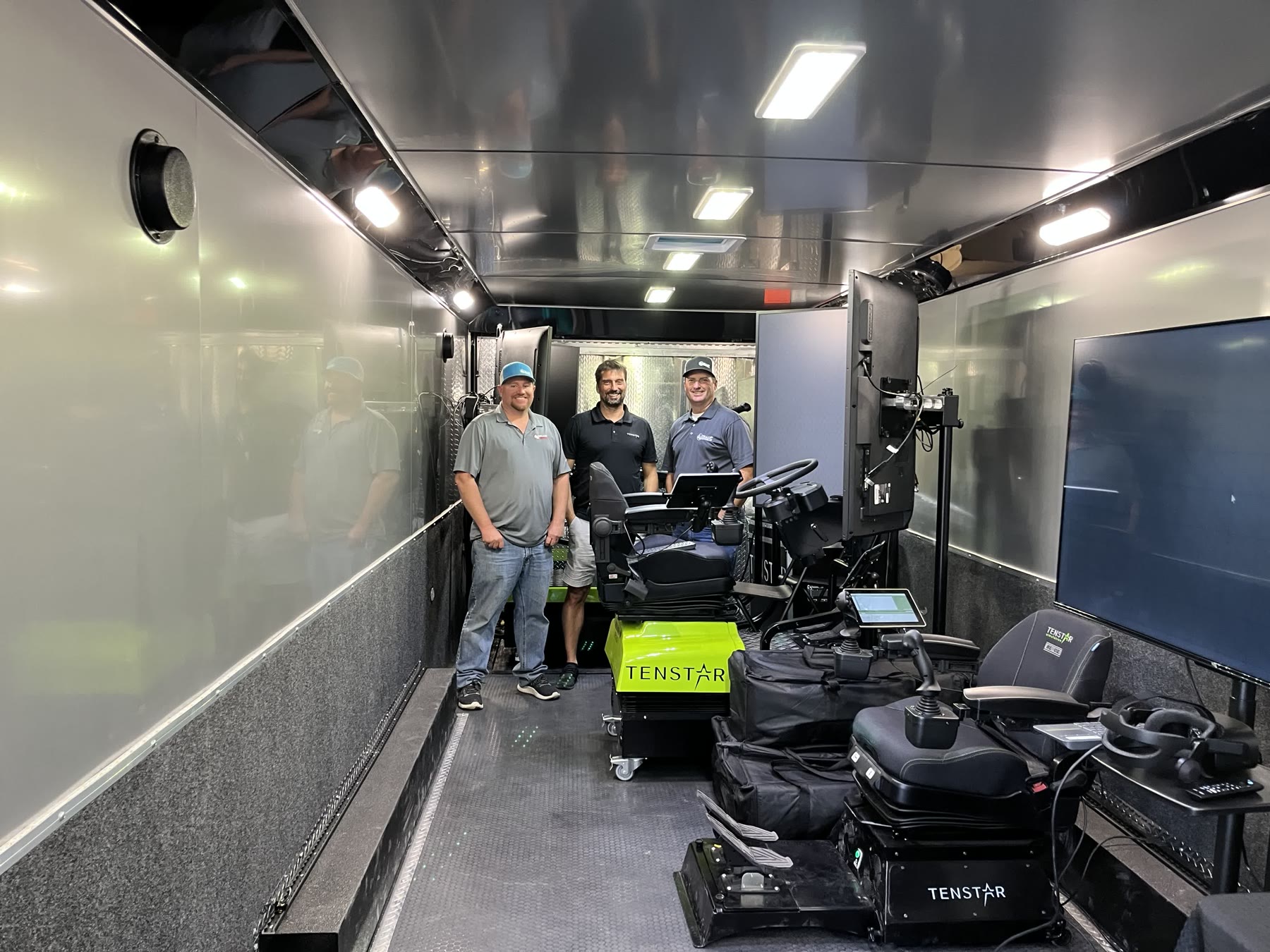
Inside the mobile unit
A complete training bay, ready for the crew.
Multiple simulator stations create room for guided practice, conversation, and repetition in one dedicated environment. The trailer brings that setup to the operation instead of asking the operation to send people away.
Plan a mobile simulator session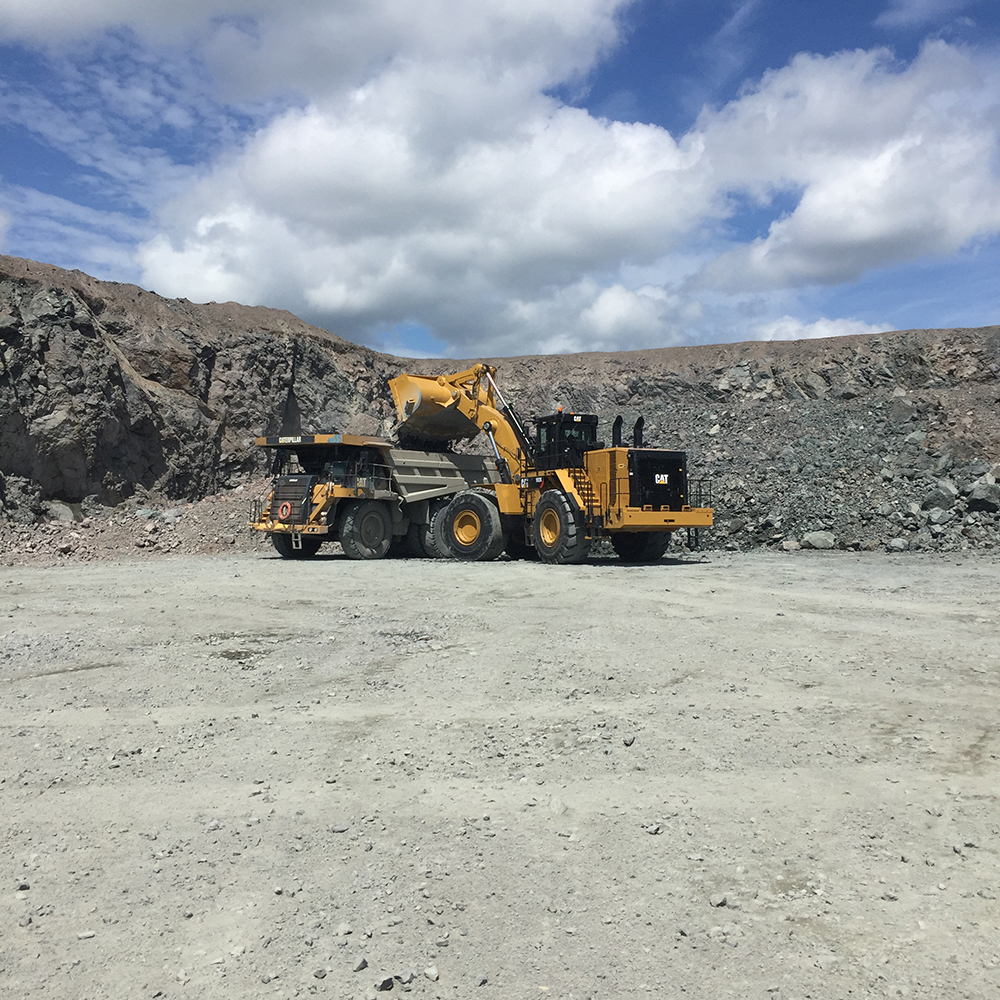 Field environment / Active production
Keep production equipment where it belongs: on the job.
The right environment for the stage
Practice first. Apply it in the field.
PracticeFocused practice in a more controlled learning setting.
ApplyApplication on actual machines, around real conditions and site procedures.
Simulator training supports operator development; it does not replace the machine-specific instruction, site orientation, or field evaluation an employer may require.
Where it can fit
A practical training layer for a range of crews.
Every operation and operator is different. Simulator training can be shaped around the experience level and field context you bring to the conversation.
- 01
Newer operators
A more controlled place to begin.
Introduce machine concepts and let developing operators practice without starting on a production machine. - 02
Experienced crews
Focused time to revisit technique.
Use simulator sessions as a structured setting for refresher work and guided practice away from active production. - 03
Busy operations
Training without surrendering an asset.
Make room for operator development while loaders, dozers, graders, or other working machines remain assigned to the job. - 04
Field-training preparation
Build a foundation before the seat.
Use simulator training as one step toward hands-on instruction on the machines and conditions operators encounter at work.
From your call to the training bay
A mobile session, connected to the work ahead.
- 01
Align on the need
Share your location, crew, equipment context, and the training goals you want to address.
- 02
Bring the trailer in
Collup Enterprises brings the mobile simulator training environment to your location in the USA.
- 03
Guide the practice
Operators work through focused simulator time in a setting built for learning and instruction.
- 04
Connect it to the field
Use the session as preparation for the real equipment, applications, and site procedures your operation requires.
Straight answers
Mobile simulator training, clarified.
Start here, then talk with our team about the specifics of your crew and location.
01Where is mobile simulator training available?
Collup Enterprises can haul the simulator trailer to customer locations across the United States. Call our team to discuss your location and scheduling needs.
02Does simulator training replace hands-on field training?
No. Simulator work provides a more controlled place to build familiarity and confidence. Operators still need instruction and evaluation appropriate to their actual machines, applications, site rules, and working conditions.
03Why use a simulator instead of a production machine?
A simulator creates a safer learning environment and allows training to happen without tying up a machine that the operation needs for production.
04Can simulator training support operators with different experience levels?
It can provide structured practice for developing operators and focused refresher time for more experienced crew members. The right session depends on the people, equipment context, and goals involved.
05What should we share when we call?
Tell our team where you are located, who needs training, what equipment context is involved, and what you want the crew to improve. We can help determine whether mobile simulator training fits the need.
Bring the training bay to your team
Put operator development on the schedule.
Tell us where your team is located, who needs training, and what you want to work on. Start with a direct conversation about fit and availability.